Does this sound like you?
Tick what fits. Your ticks travel with the pin.
What may be going on
The neck carries the head, which weighs about as much as a bowling ball, on seven small bones that are built for movement rather than for holding still. The muscles that do the holding are in two groups. Deep at the front, small muscles tuck the chin and keep the head balanced over the spine. At the back and the sides, the big muscles that run up from the shoulders take over whenever the head drifts forward of that balance point, and a head held forward for an hour at a screen or a phone asks them to hold several times its weight. By the end of the day they are tight; by the morning, after hours in one position on the pillow, they are tight and short. 3
The guideline for neck pain describes this as a mobility pattern: stiffness and ache that change with position and movement, without pain spreading down the arm. It is the most common neck pattern there is, and the one that responds best to simple things done often. 1 The reviews of exercise for neck pain agree that strengthening the deep front muscles and getting the upper back moving does better than stretching alone. 2
The upper back matters more than it seems. When the chest is rounded and the upper back stiff, the neck has to turn further for the same look over the shoulder, and it is the neck, not the upper back, that complains. A quarter of a turn of the head comes from the upper back on a good day, and from the neck alone on a stiff one. That is why a movement for the upper back sits in a list about the neck.
Mornings have their own causes. A pillow that holds the head bent to one side for eight hours, a soft mattress that lets the shoulders sink, sleeping on the front with the head turned: each asks one side of the neck to stay short all night. Changing the pillow is a fair experiment before anything else. Stress tightens the same muscles, and a tense week shows up in the shoulders first.
The movements below are small on purpose. The nod and the chin glide wake the deep front muscles and bring the head back over the spine; done every hour at the desk they are a reset rather than a workout. The stretch for the top of the shoulder eases the big muscle that has been doing the holding. The open-book turn gives the upper back its share of the rotation back. Expect the morning stiffness to shorten within a week or two and the turn to improve over a few weeks, as long as the screen hours get the hourly reset too.
Movements that may help
Check with your doctor or a physiotherapist before you try a movement that is new to you.
- StartEnd
Deep neck flexor nodA small nod, as if saying yes; the big muscles at the sides of the neck stay soft. Deep neck flexor nod
Why it is hereWakes the small muscles at the front of the neck that balance the head. Lying down, the nod is tiny and the big muscles at the sides stay soft.
HowLying on the back, nod the chin gently as if saying a small yes, feeling the front of the neck work without the big muscles at the sides; hold 5 seconds. 10 repetitions, twice a day.
Watch forNo straining; the jaw stays relaxed
- StartEnd
Chin retraction sittingGlide the head straight back, as if pulled up from the crown; a small movement. Chin retraction sitting
Why it is hereThe same balance, sitting at the desk. Gliding the head straight back brings it over the spine; ten of these every hour undo most of the forward drift.
HowSitting tall, glide the head straight back as if being pulled by the crown, hold 3 seconds, release. 10 repetitions every hour of desk work.
Watch forSmall movement; no pain
- StartEnd
Upper trapezius stretchAnchor the shoulder down; tilt the head away until the side of the neck stretches. Upper trapezius stretch
Why it is hereEases the big muscle from the neck to the top of the shoulder that has been holding the head up all day. Anchor the shoulder down so the stretch stays in the neck.
HowSitting, hold the seat with one hand to anchor the shoulder down. Tilt the head to the other side and slightly forward until the side of the neck stretches; hold 30 seconds, 3 times each side.
Watch forGentle; no pulling on the head
- StartEnd
Open-book thoracic rotationKnees stay together; the turn comes from the upper back. Open-book thoracic rotation
Why it is hereGives the upper back its share of the turn back, so the neck no longer has to do it all. The knees stay together so the movement comes from the ribs, not the hips.
HowLie on the side with knees bent, arms straight in front. Open the top arm over to the other side letting the upper back rotate; hold 5 seconds, return. 10 each side, daily.
Watch forKnees stay together so the movement comes from the upper back
When to see someone instead
Voodoo is advisory, never a diagnosis. See someone in person today if any of these is true:
- a recent injury you cannot put weight on, or a limb that looks out of shape
- fever or feeling unwell along with the pain
- a joint that is hot, red and swollen
- new trouble with bladder or bowel, or numbness around the seat
- weakness in both legs, or weakness that is getting worse
- chest pressure, or pain spreading into the left arm
- unexplained weight loss, or pain that wakes you at night
- pain, pins and needles or weakness spreading down an arm into the hand
- a stiff neck with headache and fever, or one that began with a blow to the head or a crash
- dizziness, trouble with balance or speech, or a change in vision with the neck pain
- a neck that will not bend forward at all, or stiffness that is getting steadily worse rather than better
Try it on your own body
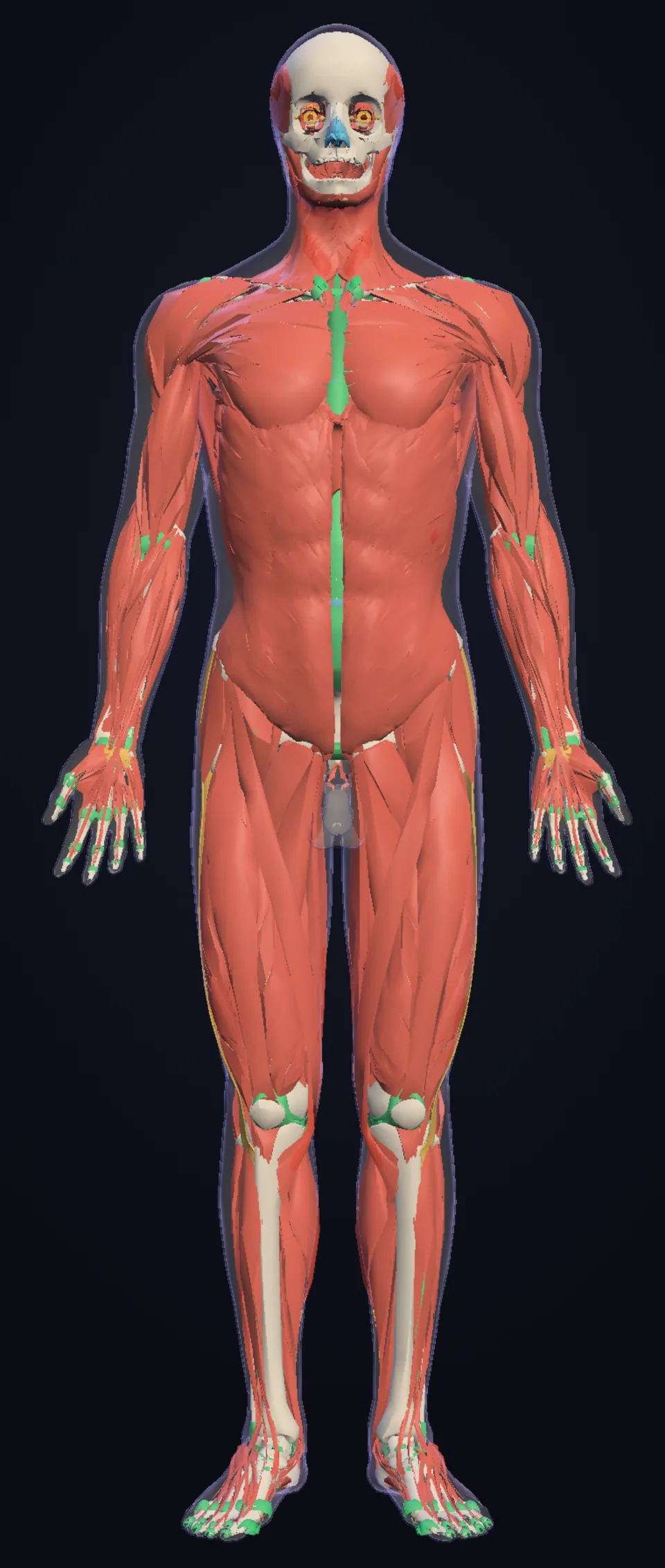
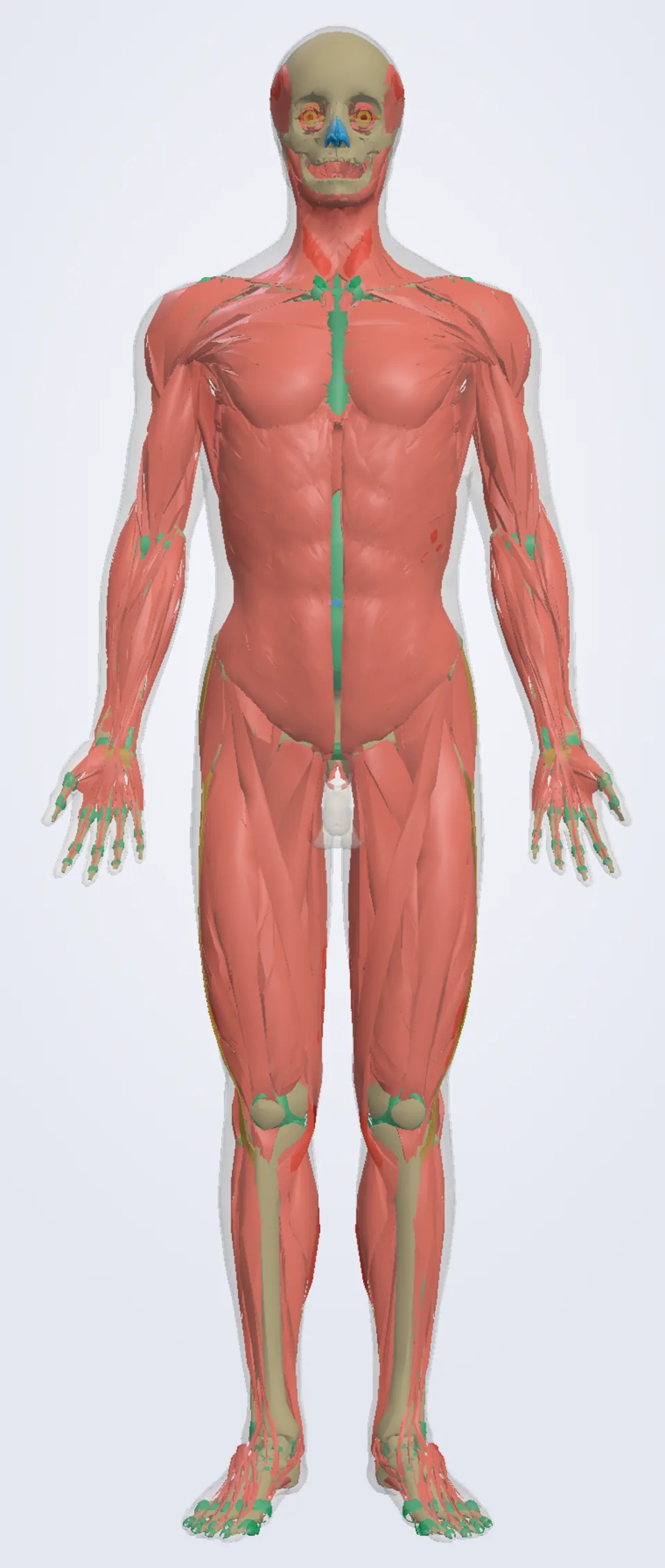
Put a pin on the neck where it is stiffest, and another on the top of the shoulder if it is hard by the afternoon. Voodoo shows the muscles that run between them and suggests the first reset to try.
Nothing ticked yet: the pin starts blank.
Pin it on your bodySources
- Neck Pain: Revision 2017. Clinical Practice Guidelines. Journal of Orthopaedic & Sports Physical Therapy (Blanpied PR et al.), 2017.
- Exercises for mechanical neck disorders. Cochrane Database of Systematic Reviews (Gross A et al.), 2015.
- Kinesiology of the Musculoskeletal System: Foundations for Rehabilitation, 3rd edition. Elsevier (Neumann DA), 2017.
Read next
Updated 24 October 2026