Does this sound like you?
Tick what fits. Your ticks travel with the pin.
What may be going on
The low back is built to move. Five large bones stacked on the pelvis, each pair separated by a disc that acts as a spacer and a cushion, held by ligaments and wrapped in layers of muscle. Sitting folds the hips and lets the low back slump into a long, held curve. Nothing moves, the muscles that should be sharing the load go quiet, and the discs and ligaments carry a steady pull for as long as you stay put. The first movement afterwards is the stiff one because everything has settled into the held shape. 1
This is what the back-pain guidelines mean by a mechanical pattern: pain that changes with position and movement, worse with one shape and eased by another. That is a good sign, not a worrying one. The large reviews are consistent that for this pattern, staying active and moving the back through its range does better than rest, and that no one movement is the magic one; the one you will actually do is the one that helps. 2 3
Two habits usually sit behind the pattern. The first is time: the body tolerates almost any position for twenty minutes and almost none for two hours. The second is the way you bend. When the hips are stiff or the habit is lost, the low back does the bending instead, rounding fully to reach the floor, and that is the movement people with this pattern learn to dread. Bending from the hips with the back held steady moves the work to the large muscles of the buttock and the thigh, which are built for it. 4
The movements below work on both habits. The first three are small and gentle, for the stiff hour: a rock of the pelvis in the chair, a knee drawn to the chest on the floor, the back arched and rounded on hands and knees. They are not exercise so much as a reminder of the shapes the back has forgotten it can make. The fourth asks the deep muscles of the trunk to hold the back steady while an arm and a leg move. The fifth is the bend itself, practised with a stick along the spine so you can feel when the back stays flat and when it rounds. 1
Expect the stiffness to ease within a week or two of regular movement and the bend to feel safer after a few weeks of practice. If the pain has spread down a leg, or does not change with position at all, that is a different pattern and worth seeing someone about rather than working through alone.
Movements that may help
Check with your doctor or a physiotherapist before you try a movement that is new to you.
- StartEnd
Pelvic tiltsA small rock of the pelvis: flatten the low back, then let it lift a little. Pelvic tilts
Why it is hereThe smallest movement in the set, and the one to do at the desk. A rock of the pelvis flattens the low back and then lets it lift, which is enough to break up an hour of one shape.
HowLying on the back with knees bent, flatten the low back into the floor then let it arch gently. 15 slow cycles, 2 to 3 times a day.
Watch forPain-free range only
- StartEnd
Knee to chestDraw the knee in until the low back eases; no pulling on the knee. Knee to chest
Why it is hereDraws the low back out of the held curve and lets it round gently the other way. No pulling on the knee; the hands only hold.
HowLying on the back, draw one knee towards the chest with the hands until the low back eases; hold 20 seconds, swap. Then both knees. 3 rounds, daily.
Watch forComfortable range
- StartEnd
Cat-camelRound the back towards the ceiling, then let it sag; slow and within comfort. Cat-camel
Why it is hereTakes the whole back from rounded to arched, slowly, within comfort. Mornings and after long sits are the times it matters most.
HowOn hands and knees, round the back towards the ceiling, then let it sag while lifting the head. 10 slow cycles, 2 to 3 times a day.
Watch forSlow and within comfort
- StartEnd
Bird dogReach long, not high; a cup on the low back should not fall. Bird dog
Why it is hereAsks the deep trunk muscles to keep the low back still while an arm and the opposite leg reach. The cup on the back is the honest test.
HowOn hands and knees, reach one arm forward and the opposite leg back without letting the pelvis tilt; hold 5 seconds, return, swap. 3 sets of 8, every other day.
Watch forA cup on the low back should not fall
- StartEnd
Hip hinge with a stickHips back, back flat; the knees stay soft. Hip hinge with a stick
Why it is hereThe bend practised with a stick along the spine. The three points of contact tell you the back has stayed flat and the hips have done the folding.
HowHold a stick along the spine touching the head, upper back and tailbone. Push the hips back and bow forward keeping all three contacts, then stand. 3 sets of 10, daily.
Watch forKnees soft, not locked; back stays neutral
When to see someone instead
Voodoo is advisory, never a diagnosis. See someone in person today if any of these is true:
- a recent injury you cannot put weight on, or a limb that looks out of shape
- fever or feeling unwell along with the pain
- a joint that is hot, red and swollen
- new trouble with bladder or bowel, or numbness around the seat
- weakness in both legs, or weakness that is getting worse
- chest pressure, or pain spreading into the left arm
- unexplained weight loss, or pain that wakes you at night
- pain spreading below the knee, or pins and needles down a leg
- a back that began hurting after a fall, a lift that went wrong, or a car accident
- pain that is the same lying down, sitting and walking, and does not ease with any position
- low back pain with a history of cancer, long-term steroid use or brittle bones
Try it on your own body
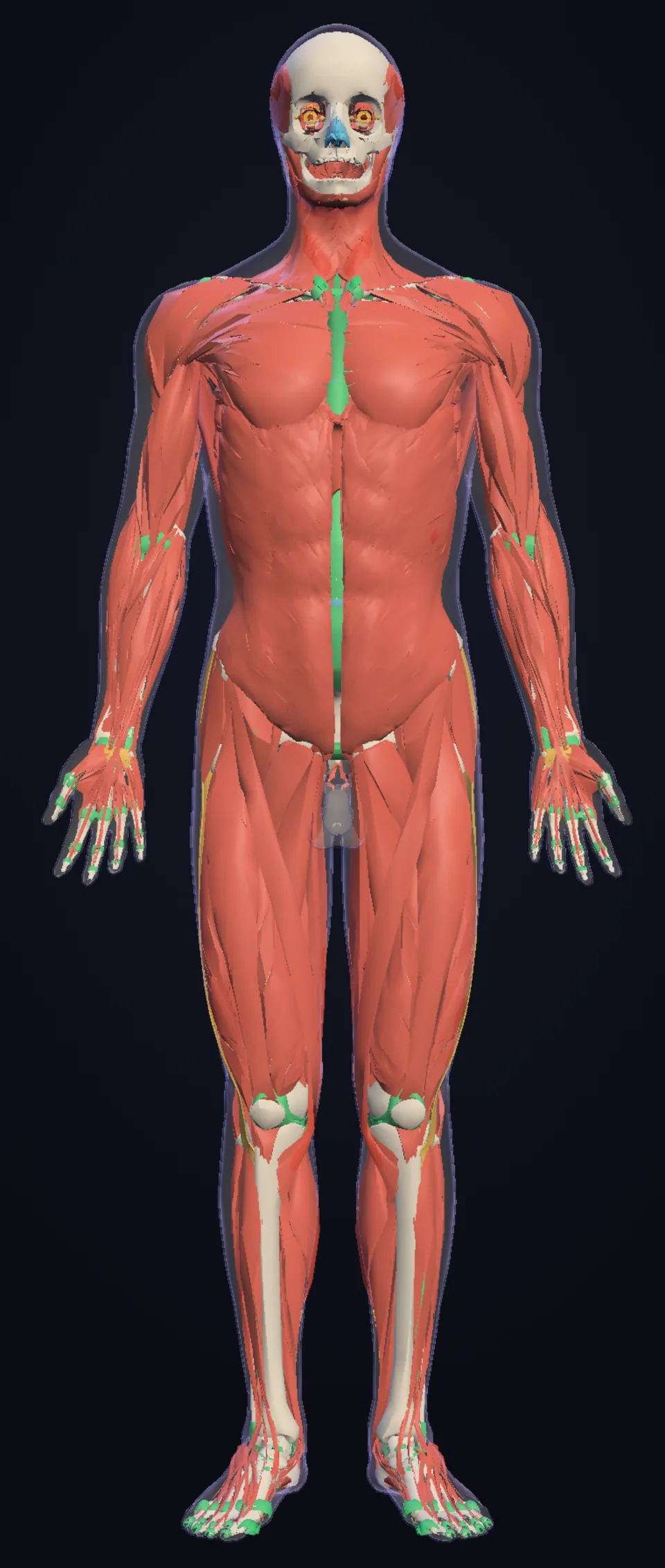
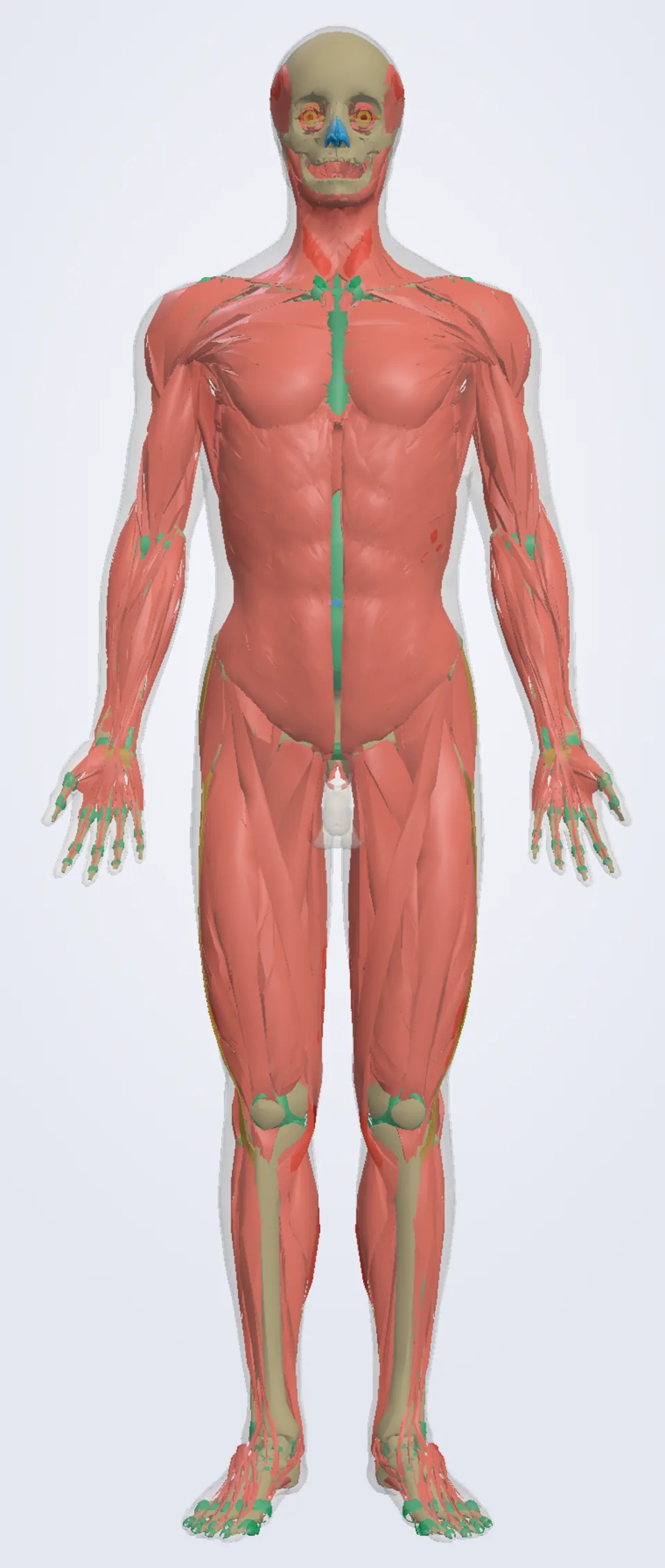
Put a pin on the low back where the ache sits. Voodoo shows the stack of bones, the discs between them and the muscles that hold it, and suggests the first movement to try.
Nothing ticked yet: the pin starts blank.
Pin it on your bodySources
- Interventions for the Management of Acute and Chronic Low Back Pain: Revision 2021. Journal of Orthopaedic & Sports Physical Therapy (George SZ et al.), 2021.
- Low back pain and sciatica in over 16s: assessment and management (NG59). National Institute for Health and Care Excellence, 2016.
- Exercise therapy for chronic low back pain. Cochrane Database of Systematic Reviews (Hayden JA et al.), 2021.
- Diagnosis and Treatment of Movement Impairment Syndromes. Mosby (Sahrmann SA), 2002.
Read next
Updated 19 October 2026