Does this sound like you?
Tick what fits. Your ticks travel with the pin.
What may be going on
The kneecap is a small bone that sits in a groove at the front of the thigh bone and glides up and down it every time the knee bends. The big muscle at the front of the thigh pulls on it from above, the tendon below it anchors it to the shin, and between the bone and the groove is a layer of smooth cartilage that spreads the pressure. When the knee bends under load, that pressure climbs steeply. Going down a step, squatting and sitting with the knee bent for an hour each press the kneecap into its groove harder than walking on the flat ever does. 1
Clinicians often use the term patellofemoral pain for an ache around or behind the kneecap that comes on with stairs, squats and long sitting, and the guideline that covers it lists exactly the things in the checklist above as its usual picture. Other explanations exist for pain at the front of the knee, and a physiotherapist can tell them apart in person. 1
The usual story is one of load outrunning tolerance. A new sport, a return to running, a job that added stairs, or a stretch of weeks when the thigh muscles lost strength and the kneecap lost the pull that keeps it tracking in the groove. The thigh muscle on the inner side above the knee is often the first to go quiet and the last to come back, and when it does the kneecap tends to ride a little outward in its groove. A hip that lets the thigh roll inward on the way down a step adds to the same drift. 2
The good news is that the fix is mostly strength, and the guideline is clear that thigh and hip strengthening is the best-supported approach. 1 The order matters. Movements that tighten the thigh without bending the knee come first, because they build the pull without the pressure. Holds in a shallow bend come next, and only then the slow step-downs that look like the thing that hurts. Tissue around a joint settles when it is loaded a little more than it is used to and given time to adapt, and flares when the jump is too big. 3 Some ache during a session that is gone by the next morning is within bounds; a knee that is more swollen or more sore the next day has been asked for too much.
Stairs on the way down are the test as much as the trigger. When a slow step-down from a low step with the knee over the middle toes stops hurting, the taller step and the hill come back in reach.
Movements that may help
Check with your doctor or a physiotherapist before you try a movement that is new to you.
- StartEnd
Quad setsPress the back of the knee down; feel the thigh tighten. Quad sets
Why it is hereTightening the thigh with the leg straight pulls the kneecap up into its groove without pressing it in. The first movement because it asks nothing of the sore position.
HowSit with the leg straight. Press the back of the knee towards the floor and tighten the thigh so the kneecap glides up; hold 5 seconds. 3 sets of 10, several times a day.
Watch forShould be effort without knee pain
- StartEnd
Straight-leg raiseKnee locked straight; lift to the height of the other knee. Straight-leg raise
Why it is hereThe same tightening, now lifting the weight of the leg. The knee stays locked straight the whole way, so the thigh works while the kneecap stays unloaded.
HowLying on the back with the other knee bent, tighten the thigh and lift the straight leg to the height of the other knee; lower over 3 seconds. 3 sets of 10, daily.
Watch forKeep the knee fully straight throughout
- StartEnd
Wall sitKnees over the ankles, back flat on the wall. Wall sit
Why it is hereA shallow hold that loads the kneecap gently and evenly. Stay above the depth where it aches, and let the holds grow longer before they grow deeper.
HowBack flat against a wall, slide down until the knees bend to about 45 degrees, feet a step forward, and hold 20 to 45 seconds. Knees track over the second toes. 3 to 5 holds, every other day.
Watch forStay above the depth where the kneecap aches
- StartEnd
Slow step-downsKnee over the middle toes; lower slowly. Slow step-downs
Why it is hereThe movement that hurts, trained small and slow on a low step. The knee stays over the middle toes and the pelvis level; when a set changes that, stop the set.
HowStand on a low step on the sore leg; lower the other heel towards the floor over 3 seconds, tap, and return. The knee stays over the second toe and the pelvis level. 3 sets of 8 to 10, every other day.
Watch forStop the set if the knee starts drifting inward or the kneecap aches sharply
When to see someone instead
Voodoo is advisory, never a diagnosis. See someone in person today if any of these is true:
- a recent injury you cannot put weight on, or a limb that looks out of shape
- fever or feeling unwell along with the pain
- a joint that is hot, red and swollen
- new trouble with bladder or bowel, or numbness around the seat
- weakness in both legs, or weakness that is getting worse
- chest pressure, or pain spreading into the left arm
- unexplained weight loss, or pain that wakes you at night
- the knee locks, catches or gives way, or swells within hours of a twist
- a fall onto the kneecap followed by a lump, bruising or trouble straightening the leg
- front-of-knee pain in a growing teenager with a tender bump below the kneecap
- pain that wakes you or does not change with position at all
Try it on your own body
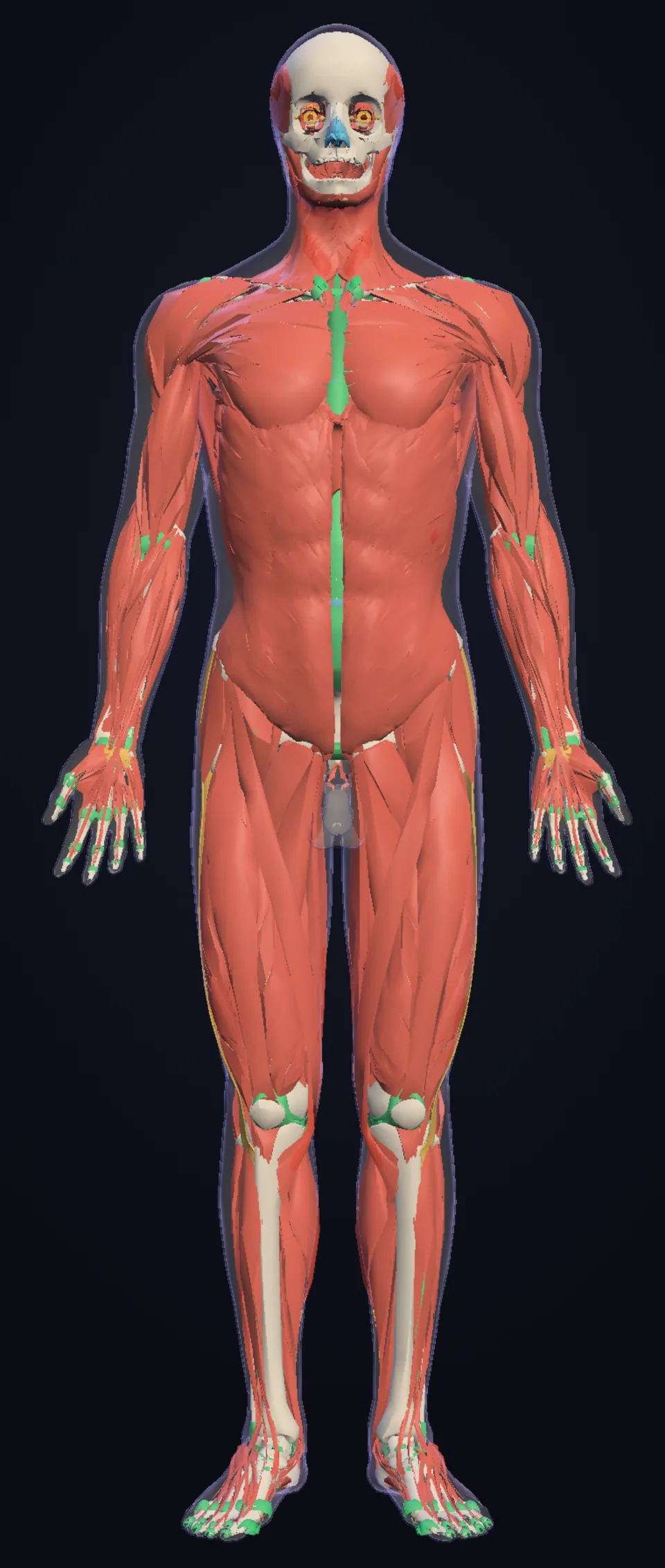
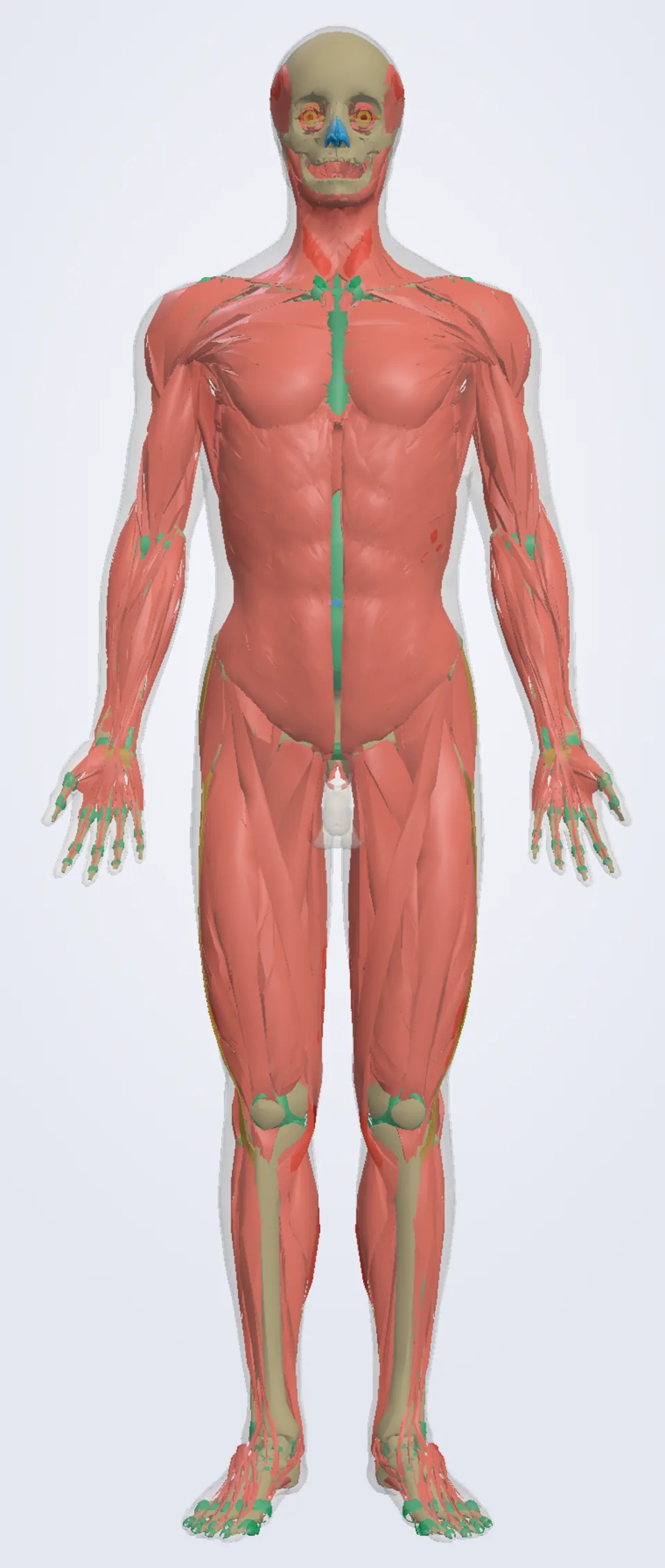
Put a pin where the front of the knee aches. Voodoo shows the kneecap, the thigh muscle that pulls on it and the tendon below, and suggests which movement comes first.
Nothing ticked yet: the pin starts blank.
Pin it on your bodySources
- Patellofemoral Pain: Clinical Practice Guidelines. Journal of Orthopaedic & Sports Physical Therapy (Willy RW et al.), 2019.
- The Influence of Abnormal Hip Mechanics on Knee Injury: A Biomechanical Perspective. Journal of Orthopaedic & Sports Physical Therapy (Powers CM), 2010.
- Is tendon pathology a continuum? A pathology model to explain the clinical presentation of load-induced tendinopathy. British Journal of Sports Medicine (Cook JL, Purdam CR), 2009.
Read next
Updated 15 October 2026